Bentleyville Brick Paver Restoration | Why Weeds Keep Coming Back Between Your Pavers
One of the most common calls we receive from Bentleyville homeowners starts with a simple question:
“Why do weeds keep growing between my pavers?”
Many homeowners assume the weeds are the problem.
The weeds are actually the warning sign.
When weeds begin appearing between brick pavers, it often means the joint sand that once protected the hardscape has already started failing. As the sand gradually washes away from years of rainfall, snow melt, irrigation, freeze thaw cycles, and normal weather exposure, empty spaces begin forming between the pavers. Those spaces collect dirt, pollen, decomposing leaves, mulch particles, and other organic debris.
Once that happens, weed seeds have everything they need to grow.
Pulling the weeds may temporarily improve appearance, but it does not address the reason they appeared in the first place.
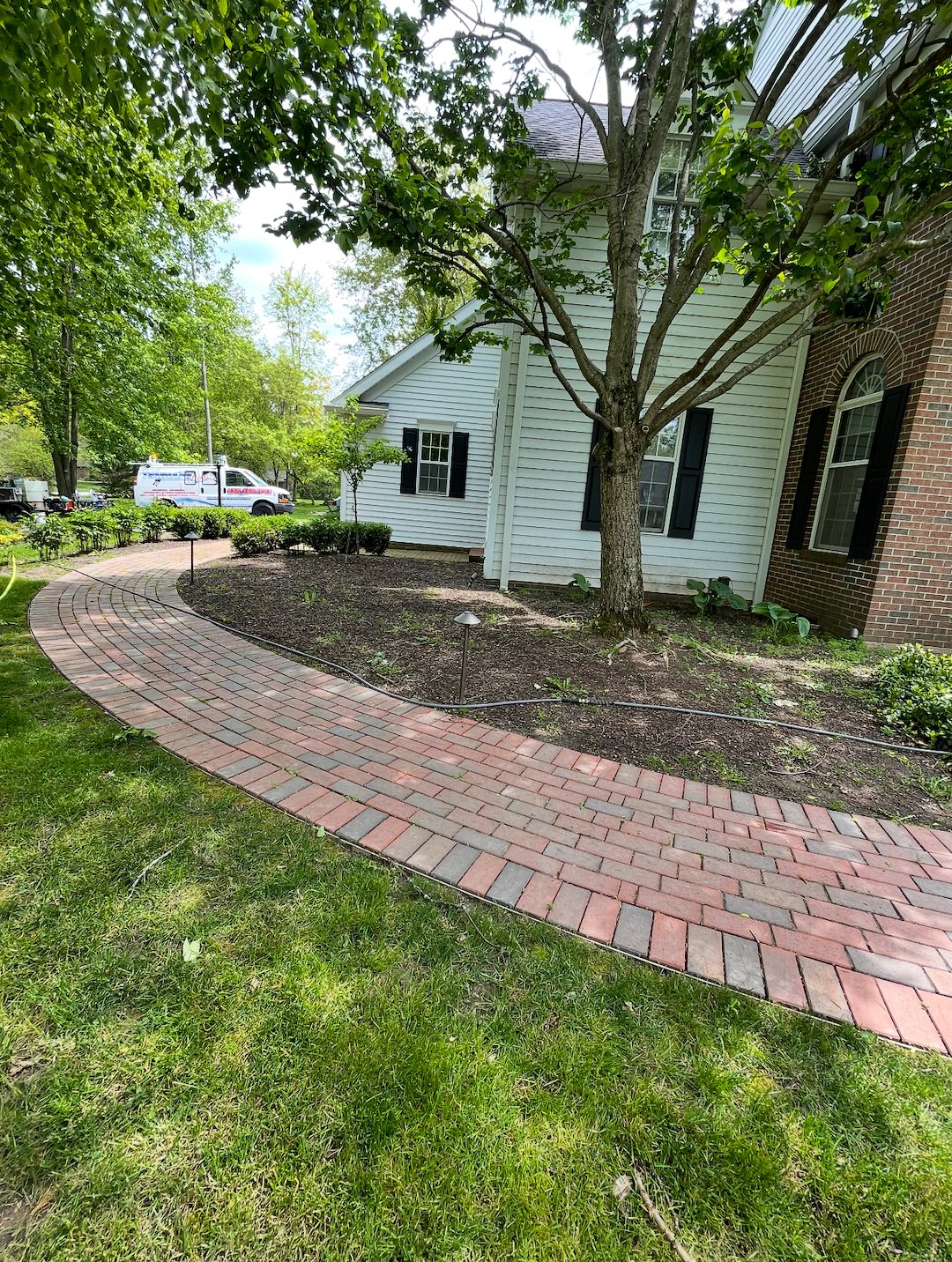
That was exactly the situation at this Bentleyville property.
The front red brick paver entrance had reached the point where the homeowner was experiencing many of the same issues people search for online every day.
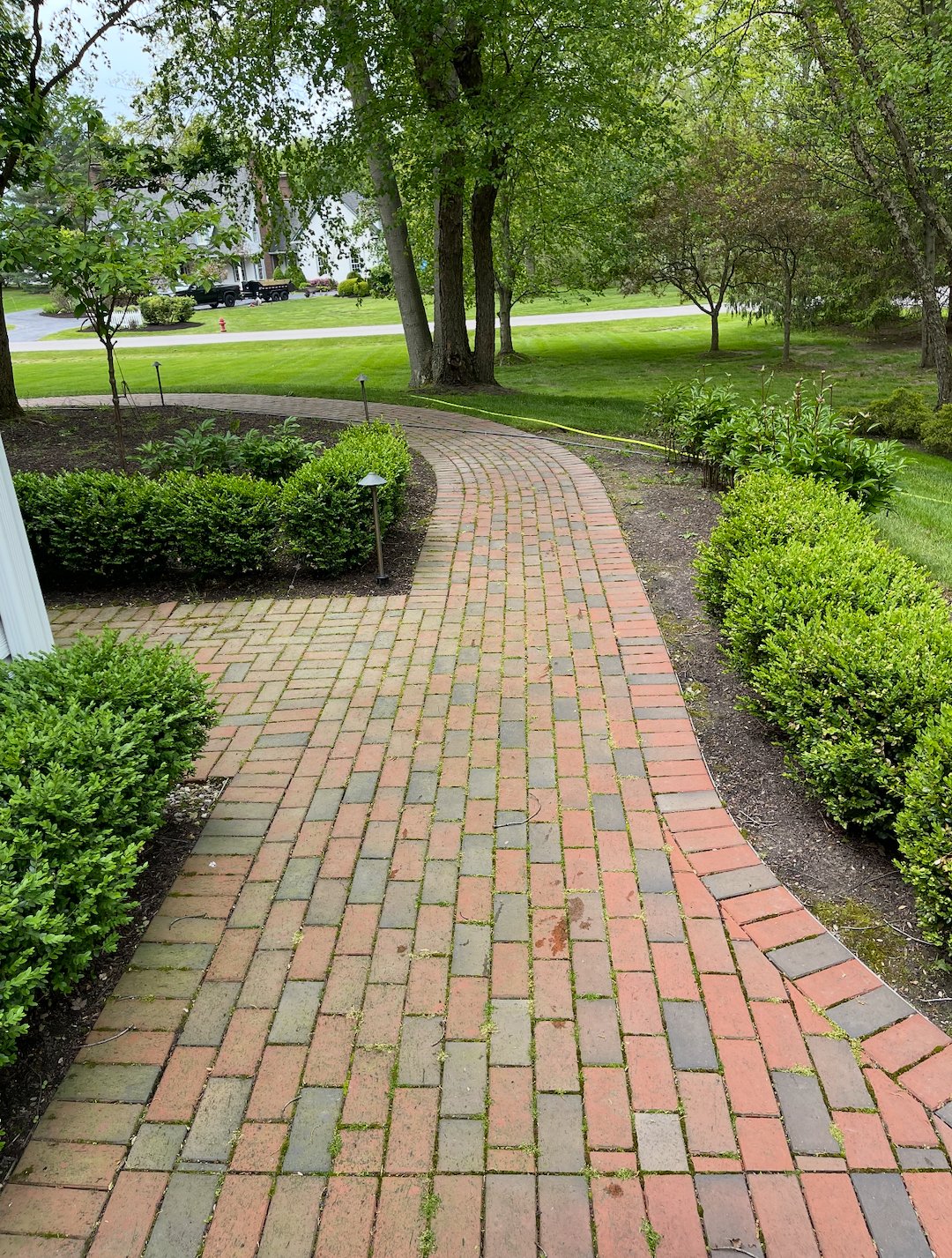
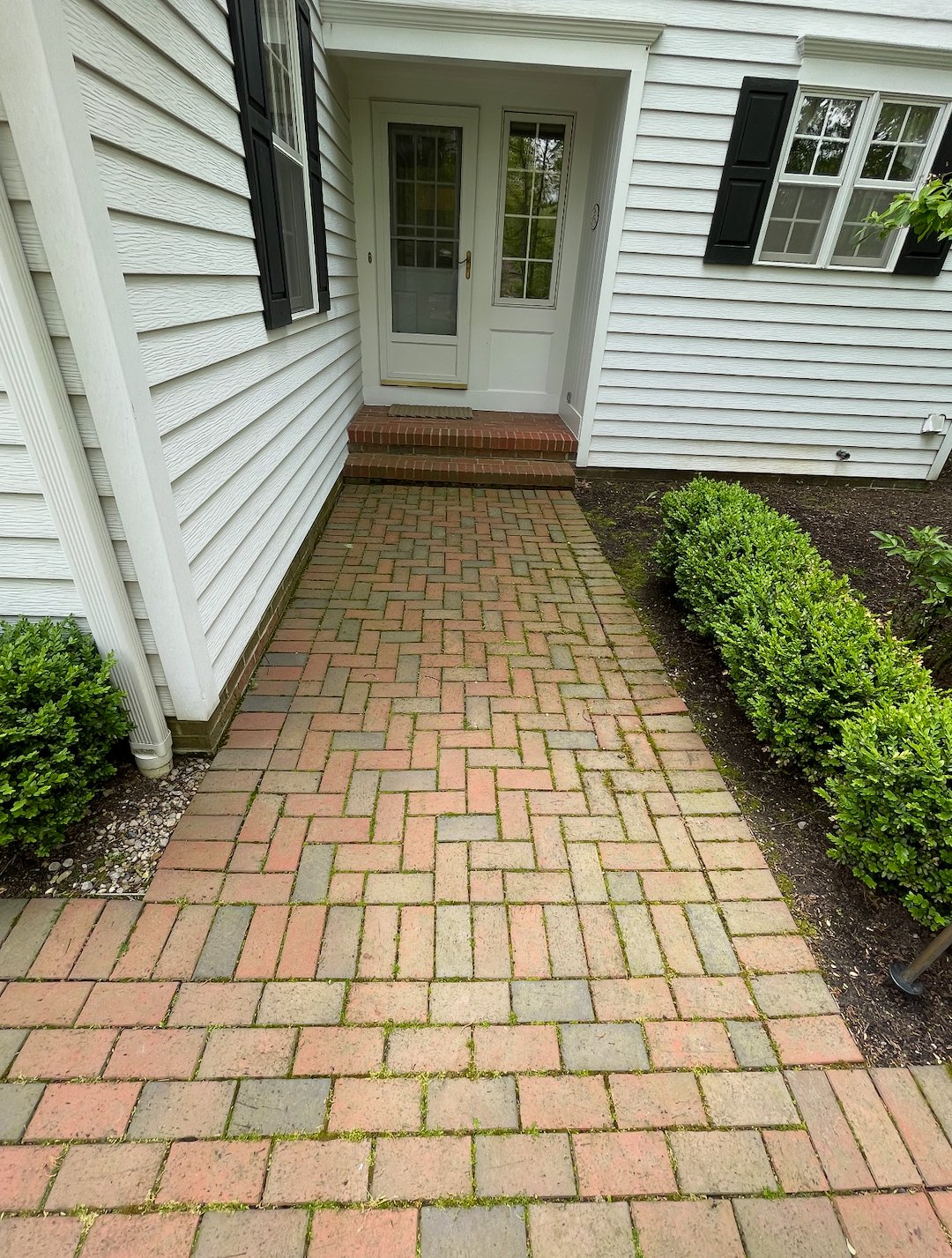
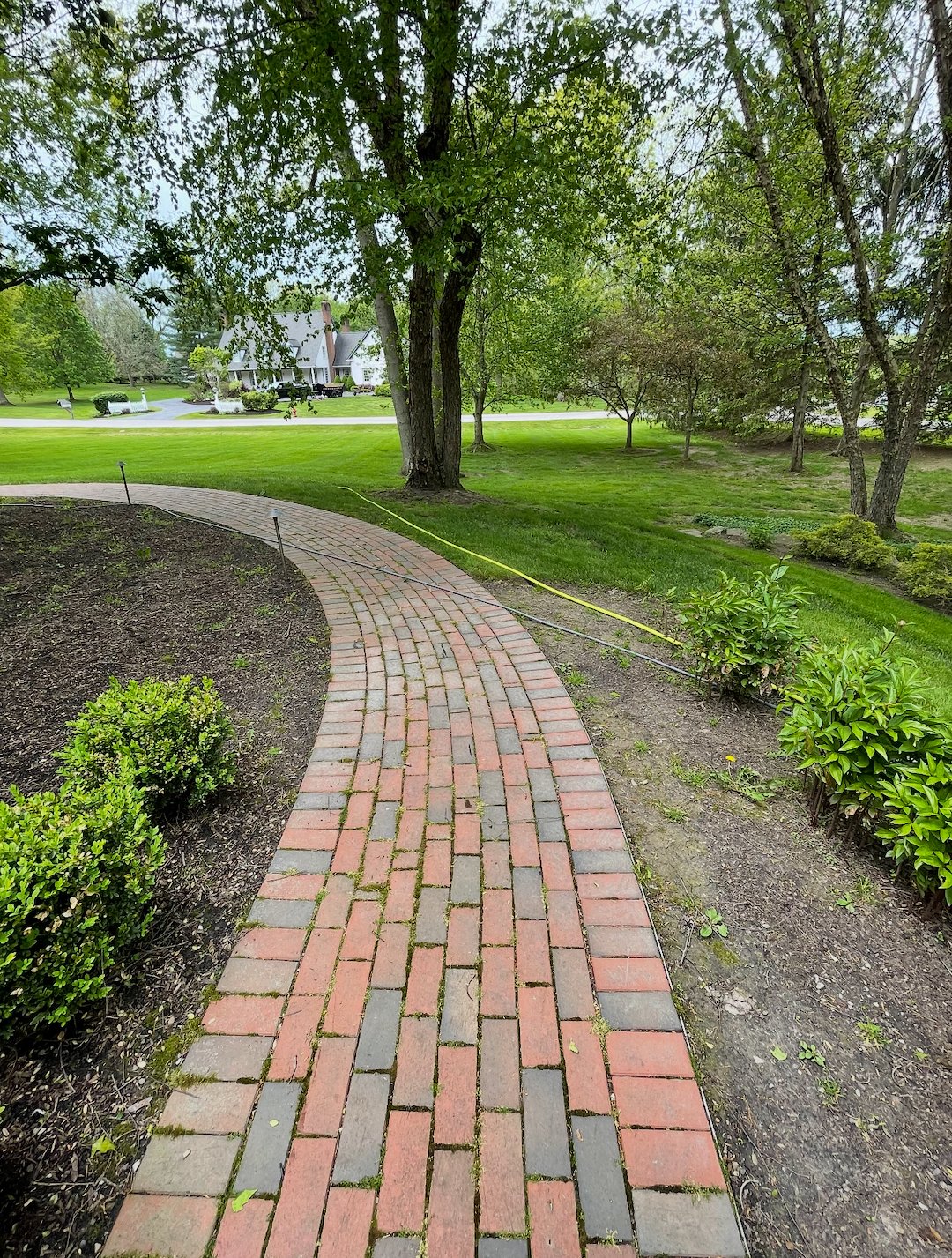
Weeds growing between pavers.
Moss spreading through the joints.
Sand washing out after heavy rain.
Ants appearing throughout the hardscape.
Brick pavers turning dark and losing their color.
The entrance simply looked older than it really was.
One of the biggest misconceptions homeowners have is believing old pavers automatically need replacement.
In many cases, they do not.
What homeowners often see as aging pavers is actually years of algae, moss, dirt, organic contamination, failing joints, and missing sand hiding the true appearance of the hardscape.
The pavers themselves were still in good condition.
The problem was everything happening around them.
Another common question homeowners ask is:
“Why is moss growing between my pavers?”
The answer is usually moisture.
Bentleyville’s mature trees, shaded lots, and heavily landscaped properties create beautiful surroundings, but they also create ideal conditions for moss development. Areas that remain damp longer after rain and morning dew allow moss to establish itself within the joints. Once it starts growing, it continues trapping additional moisture and contributes to further deterioration of the joint system.
Many homeowners also search:
“Why are my brick pavers turning black?”
Most of the time, the brick itself is not changing color.
Algae, dirt, mildew, pollen, moss, and environmental contamination gradually accumulate on the surface and mask the original appearance of the pavers. The result is a hardscape that looks faded, dark, dirty, and neglected even though the original color is still underneath.
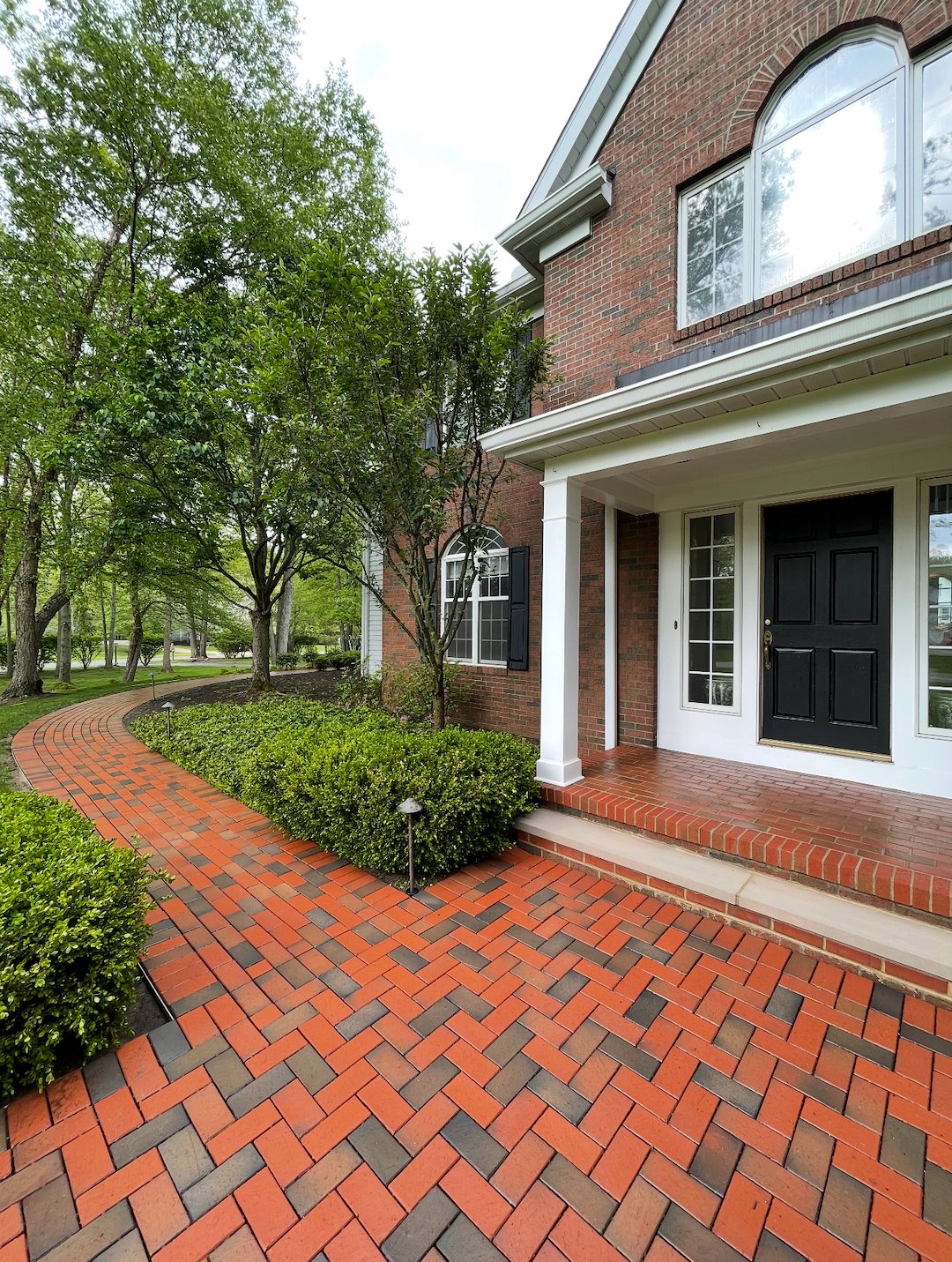
That was exactly what had happened here.
Years of buildup had hidden much of the natural color variation throughout the brick entrance.
The restoration process began with removing the algae, moss, weeds, dirt, organic buildup, and staining that had accumulated throughout the hardscape. As the contamination was removed, the original brick color immediately started becoming visible again.
The cleaning was only part of the restoration.
The real focus was the joints.
One of the biggest mistakes made during paver restoration is installing new polymeric sand directly over old sand.
Many homeowners are surprised to learn that simply adding more sand on top of deteriorated material is not considered a proper repair.
For polymeric sand to perform correctly, the old joint material must first be removed.
Why?
Because the existing joints often contain years of deteriorated sand, weed roots, moss, organic debris, dirt, insect activity, and contamination. If those materials remain trapped inside the joints, the new polymeric sand cannot achieve the depth necessary to properly stabilize the hardscape.
Think of it this way.
If a homeowner asked a contractor to install new flooring, they would not expect the new floor to be installed on top of a damaged floor.
The same principle applies to paver joints.
Before restoration could begin, the old failing joint material had to be removed so the system could be rebuilt properly.
This step is often skipped by inexperienced contractors because it takes additional time and labor. However, it remains one of the most important parts of a successful paver restoration.
Once the joints were properly prepared, the hardscape was restored using Gator Max G2 polymeric sand.
A neutral tan color was selected to complement the red brick pavers and create a classic appearance throughout the entrance. Rather than drawing attention away from the brick, the sand enhanced the overall presentation and allowed the restored color of the pavers to become the focal point.
Many homeowners search:
“What is polymeric sand?”
Unlike traditional joint sand, polymeric sand contains specialized binders that activate during installation. Once cured, the sand helps reduce washout, limit weed growth, discourage ant activity, and improve overall joint stability.
This is especially important for homeowners who are tired of seeing the same problems return every year.
Weeds.
Moss.
Missing sand.
Ants.
Loose joints.
Recurring maintenance.
Properly installed polymeric sand helps address the conditions that allow those problems to develop in the first place.
Following installation of the Gator Max G2 polymeric sand, the project was completed with a professional joint sealer application to help protect the restoration and preserve the appearance of the hardscape.
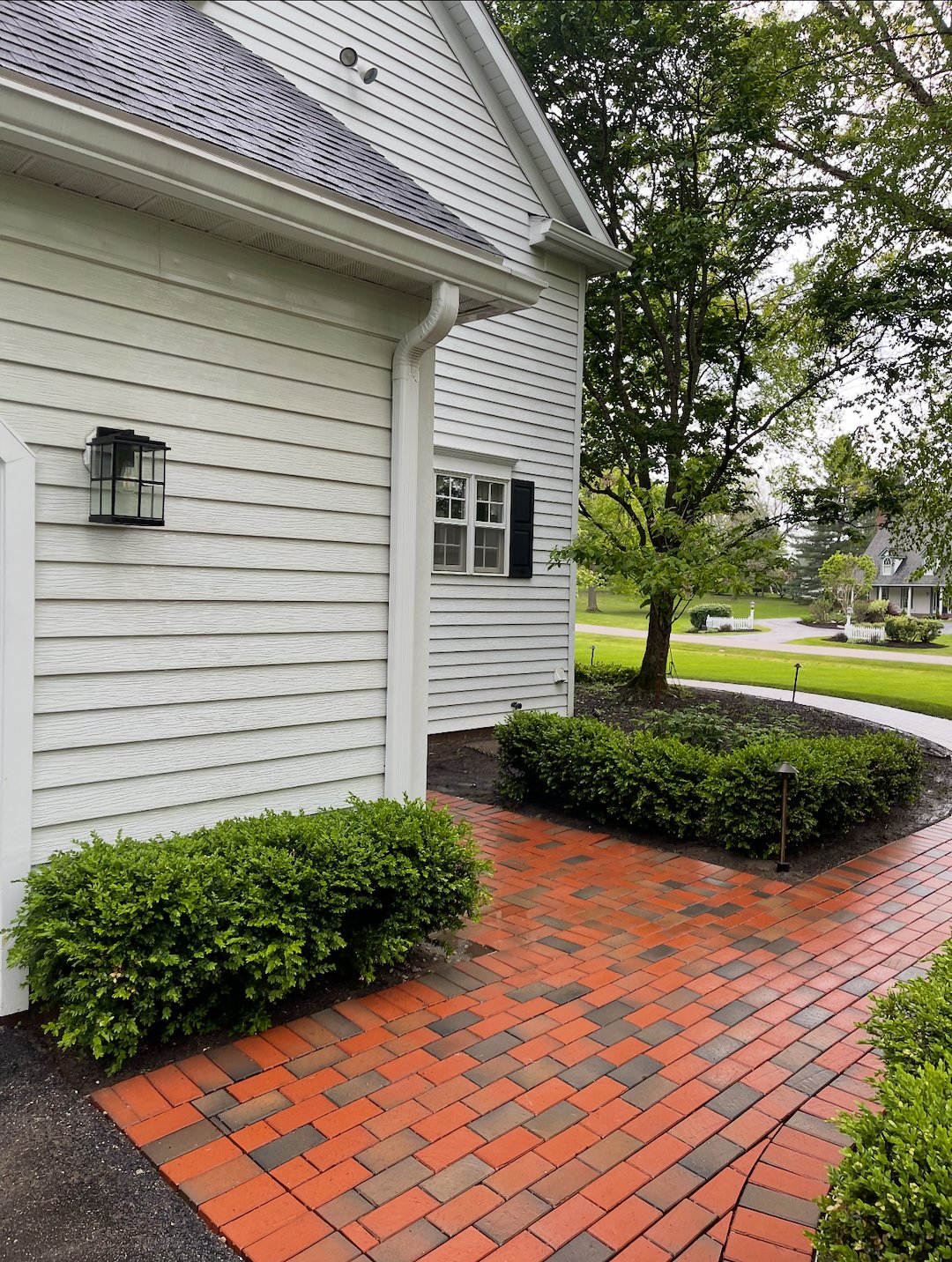
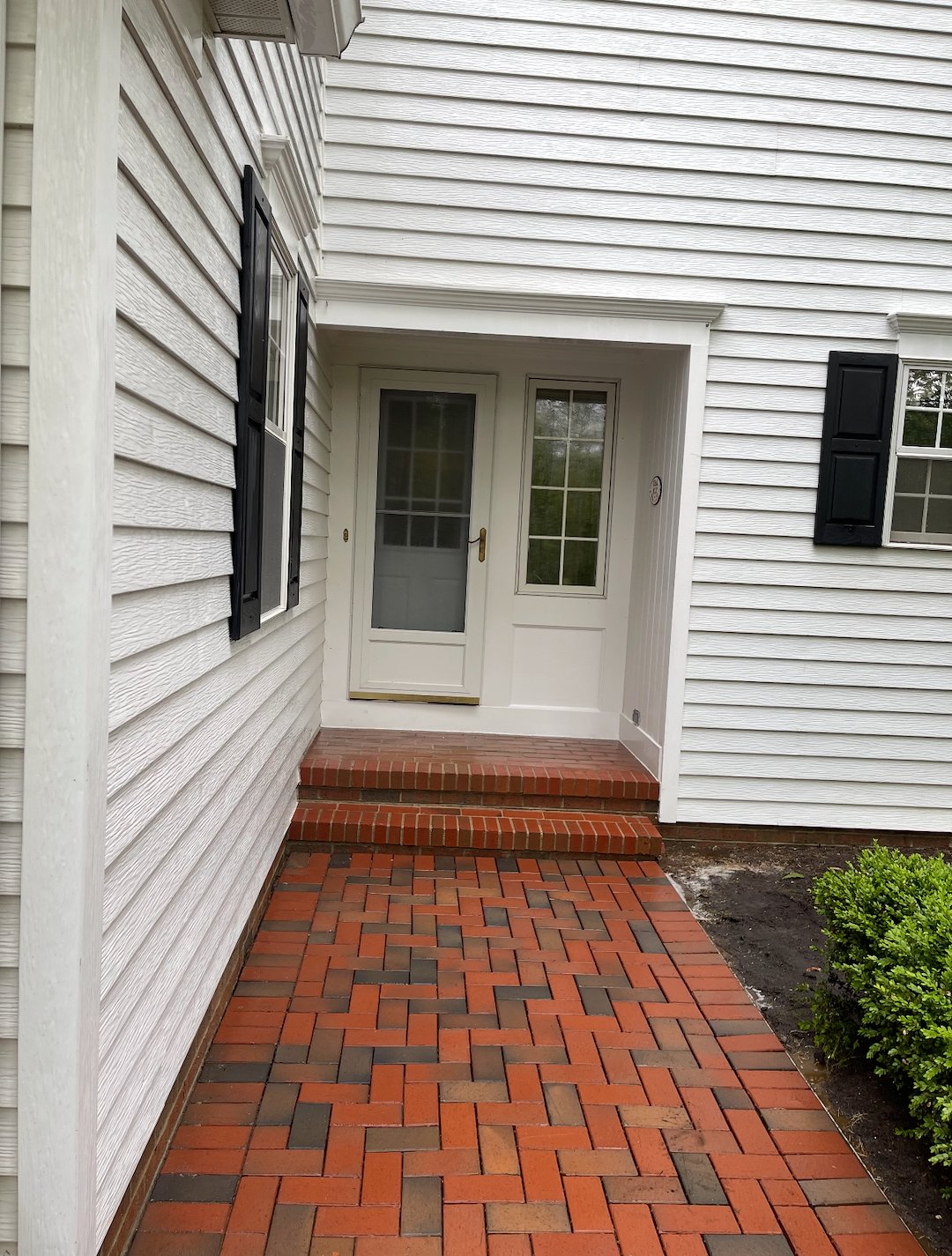
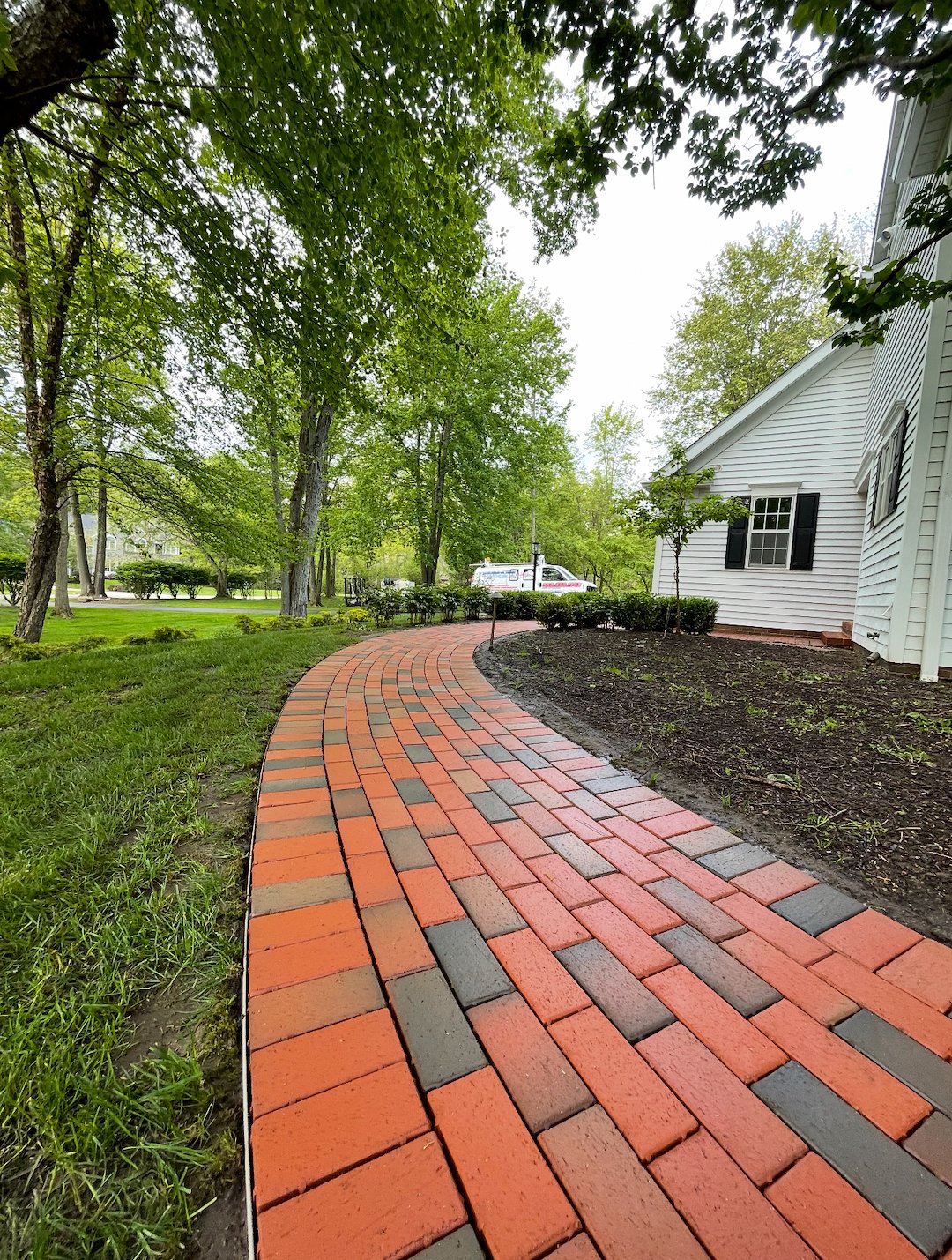
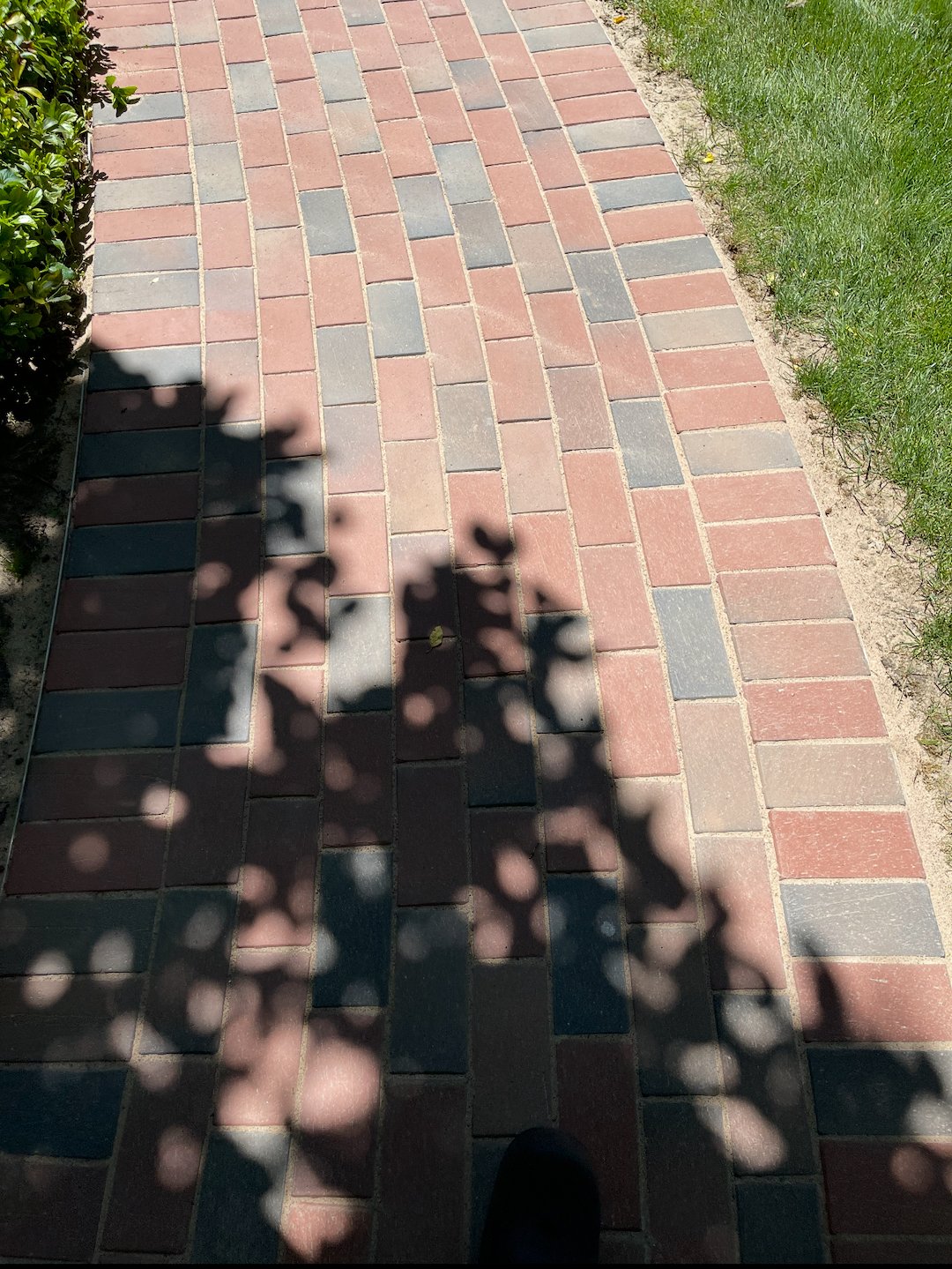
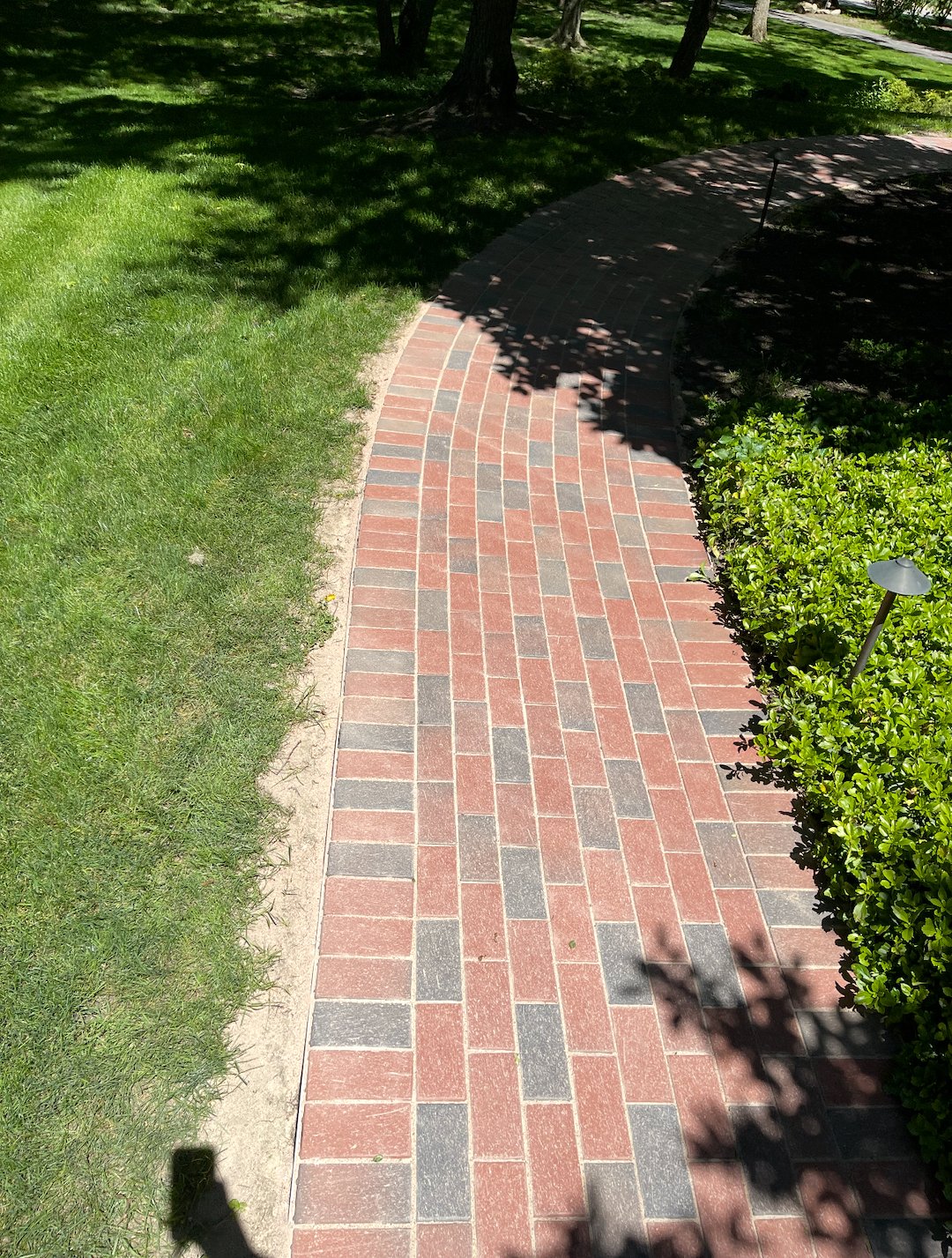
The transformation was dramatic.
The weeds were eliminated.
The moss was removed.
The old failing joint material was gone.
The brick regained its natural color.
The joints were rebuilt.
The entrance looked cleaner, sharper, and significantly more maintained.
Most importantly, the homeowner no longer saw an aging entrance.
They saw the brick paver walkway they remembered when it was first installed.
Fun Fact: One of the most searched questions in the paver industry is “Why do weeds keep growing between my pavers?” In many cases, the answer has very little to do with the weed itself and everything to do with the condition of the joint sand surrounding it.
Service provided: Paver Cleaning
Location: Bentleyville, OH
Project Image Gallery
Wash Away the Grime With Proven Pressure Washing Experts
Contact Us Today!